 BitGo
BitGo Coinbase
Electronic Noses and Electronic Tongues: How AI-Powered Sensor Systems Are Surpassing Human Taste Testers
The Rise of Intelligent Biosensors That Can Recognize Thousands of Flavor and Aroma Compounds in Seconds for Instant Quality Control and Counterfeit Detection
For centuries, the food and beverage industry has relied on highly trained human experts to evaluate quality. Wine sommeliers, coffee cuppers, tea masters, perfumers, chocolatiers, and food inspectors have developed remarkable sensory abilities through years of practice. Their refined senses allow them to distinguish subtle differences in aroma, flavor, texture, and overall product quality that most consumers would never notice.
While human expertise remains invaluable, it also has natural limitations. Fatigue, illness, emotions, environmental conditions, and individual biological differences can all influence sensory perception. Even the most experienced tasters may disagree when evaluating the same product.
Recent advances in artificial intelligence, biosensor technology, nanotechnology, and machine learning are transforming this traditional approach. Researchers have developed electronic noses (eNoses) and electronic tongues (eTongues)—intelligent sensor systems capable of detecting thousands of chemical compounds with extraordinary speed, consistency, and precision.
Unlike humans, these systems never become tired, never lose concentration, and can analyze complex molecular signatures within seconds. Combined with deep learning algorithms, modern sensor platforms are becoming essential tools for food manufacturers, pharmaceutical companies, agriculture, environmental monitoring, healthcare, and anti-counterfeiting operations.
Rather than replacing human experts, these technologies are creating a new era of intelligent quality control in which artificial intelligence and human sensory expertise work together to achieve levels of accuracy previously impossible.
Why Human Taste Testing Has Limits
Human sensory perception is remarkably sophisticated, but it is not perfectly objective.
Several factors influence how people evaluate flavor and aroma:
- Fatigue
- Age
- Stress
- Illness
- Smoking
- Medications
- Previous meals
- Environmental conditions
Two professional tasters may legitimately describe the same product differently.
For industries requiring precise and repeatable quality measurements, these natural variations present significant challenges.
What Is an Electronic Nose?
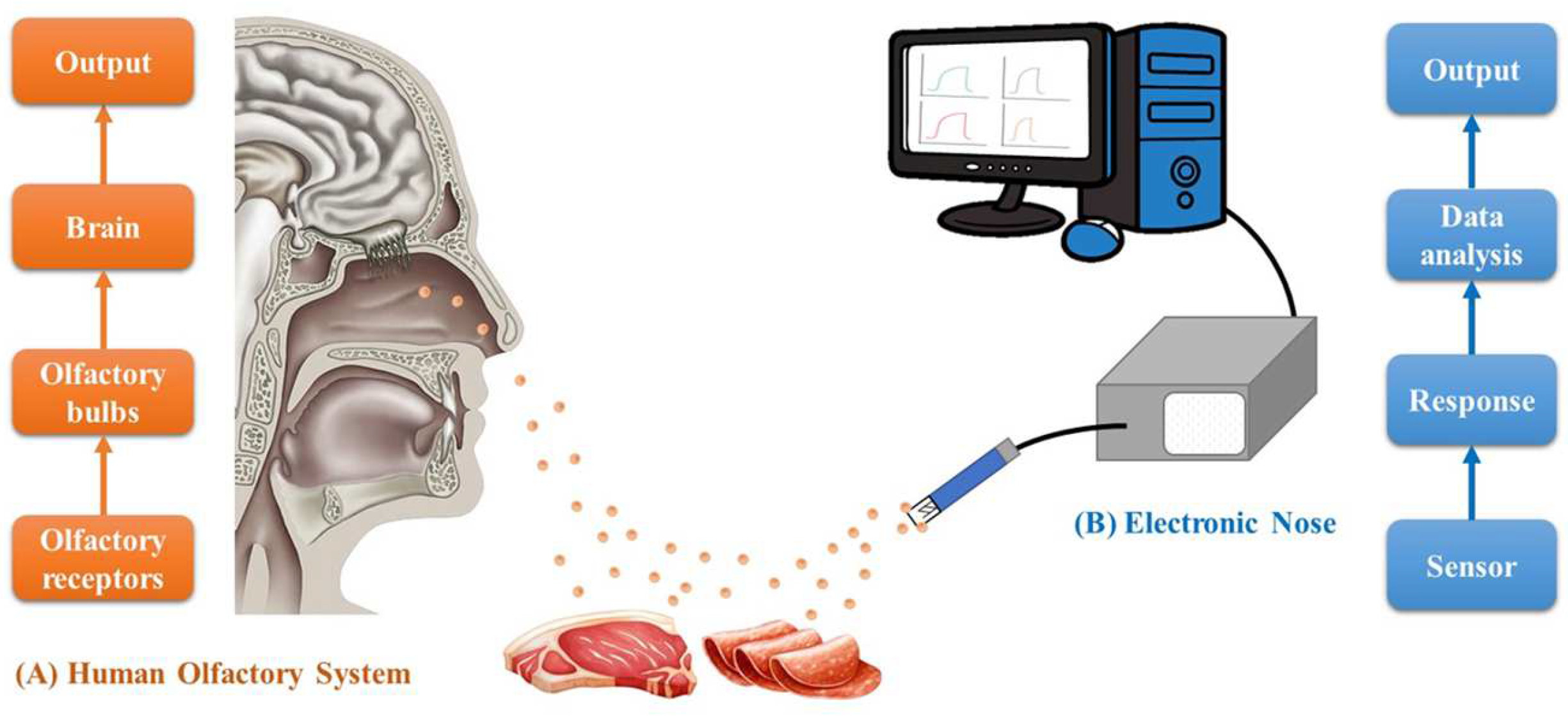
An electronic nose is an instrument designed to recognize and analyze airborne chemical compounds.
Instead of possessing biological smell receptors, it contains an array of highly sensitive chemical sensors.
Each sensor responds differently to volatile organic compounds (VOCs).
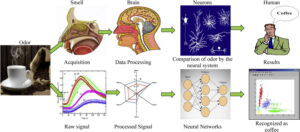
The combined sensor responses produce a unique chemical “fingerprint” for every sample.
Artificial intelligence then compares these molecular patterns against extensive databases to identify aromas or detect abnormalities.
How Electronic Noses Work
The process typically involves several stages.
First, volatile molecules are released from a sample.
Next, the sensor array measures changes caused by those molecules.
Machine learning algorithms process the resulting signals.
Finally, the system classifies the sample based on previously learned molecular patterns.
The entire process often requires only a few seconds.
What Is an Electronic Tongue?
While electronic noses analyze airborne molecules, electronic tongues evaluate dissolved substances.
These systems use multiple chemical sensors that respond to compounds responsible for taste.
Modern electronic tongues recognize patterns associated with:
- Sweetness
- Saltiness
- Sourness
- Bitterness
- Umami
Advanced research also explores additional sensory characteristics such as:
- Astringency
- Creaminess
- Metallic sensations
- Fat perception
- Mouthfeel
The result is a highly detailed chemical profile rather than a simple taste score.
Artificial Intelligence Makes the Difference
Sensors alone collect raw information.
Artificial intelligence transforms these measurements into meaningful insights.
Machine learning models can:
- Identify product categories
- Detect contaminants
- Recognize spoilage
- Predict shelf life
- Verify authenticity
- Compare production batches
- Discover subtle quality trends
As more samples are analyzed, AI continuously improves its recognition accuracy.
Building Digital Aroma Libraries
Every food possesses a unique molecular signature.
Researchers create enormous digital databases containing chemical profiles for products such as:
- Coffee
- Wine
- Cheese
- Chocolate
- Olive oil
- Honey
- Tea
- Fresh fruit
When a new sample is tested, AI compares its molecular fingerprint against thousands of known reference profiles within moments.
Detecting Food Fraud
Food fraud has become a global concern.
Counterfeit products may include:
- Diluted olive oil
- Artificial honey
- Low-quality coffee
- Fake wine
- Adulterated spices
- Mislabelled seafood
- Synthetic vanilla
Many fraudulent products appear identical to genuine ones.
Electronic sensor systems can identify subtle molecular differences invisible to the human senses.
Instant Quality Control
Traditional laboratory testing often requires hours or even days.
Electronic noses and tongues can analyze products directly on production lines.
Manufacturers gain immediate feedback regarding:
- Freshness
- Consistency
- Fermentation
- Contamination
- Ingredient balance
- Product stability
Real-time monitoring enables rapid production adjustments and reduces waste.
Coffee Industry Applications
Coffee contains hundreds of volatile aroma compounds.
Electronic noses help manufacturers:
- Classify coffee origins
- Verify roasting quality
- Detect storage problems
- Identify counterfeit blends
- Maintain flavor consistency
AI systems recognize aroma patterns that would challenge even experienced coffee experts.
Wine Authentication
Wine quality depends on highly complex chemical compositions.
Electronic sensor systems assist wineries by:
- Monitoring fermentation
- Detecting oxidation
- Identifying spoilage
- Authenticating geographic origin
- Preventing counterfeit products
These technologies complement the expertise of professional sommeliers rather than replacing them.
Pharmaceutical Quality Control
The pharmaceutical industry increasingly uses biosensors to ensure product quality.
Applications include:
- Drug identification
- Stability testing
- Raw material verification
- Manufacturing consistency
- Contamination detection
Fast and objective analysis improves both safety and efficiency.
Medical Diagnostics
Electronic noses are finding promising applications in healthcare.
Researchers are investigating whether breath analysis can assist in detecting:
- Respiratory infections
- Diabetes
- Liver disease
- Kidney disorders
- Certain cancers
- Neurological conditions
Many diseases produce characteristic volatile compounds that sophisticated sensors may recognize long before symptoms become obvious.
Although highly promising, most of these applications remain under active research and clinical validation.
Agriculture and Food Production
Farmers increasingly deploy intelligent sensors to monitor:
- Crop maturity
- Fruit ripeness
- Soil conditions
- Livestock health
- Grain storage
- Post-harvest quality
Earlier detection enables better decision-making throughout the food supply chain.
Environmental Monitoring
Electronic noses also monitor air quality.
Applications include:
- Industrial emissions
- Hazardous gases
- Chemical leaks
- Indoor air quality
- Waste management
- Water treatment facilities
Continuous monitoring improves workplace safety and environmental protection.
Advantages Over Human Sensory Panels
AI-powered sensor systems offer several important benefits.
They provide:
- Objective measurements
- Consistent performance
- High-speed analysis
- Continuous operation
- Digital record keeping
- Large-scale automation
- Early anomaly detection
These strengths make them valuable partners for human experts.
Current Limitations
Despite rapid progress, electronic sensory systems do not fully replicate human perception.
Challenges include:
- Complex flavor interactions
- Emotional influences
- Cultural preferences
- Individual sensory differences
- Context-dependent perception
Human sensory evaluation remains essential for understanding consumer experience.
Future Developments
Researchers continue improving sensor technology through:
- Nanomaterials
- Bioengineered receptors
- Neuromorphic computing
- Artificial intelligence
- Quantum sensing
- Flexible wearable electronics
Future devices may approach or even exceed the sensitivity of biological sensory organs in specialized tasks.
Digital Twins of Flavor
One emerging concept involves creating complete digital models of food products.
By combining electronic noses, electronic tongues, spectroscopy, and AI, researchers can build highly accurate digital twins representing the chemical identity of a product.
These digital profiles could support:
- Global quality control
- Remote product verification
- Automated manufacturing
- Personalized nutrition
- Digital flavor transmission
Such innovations may transform food science over the coming decades.
Best Practices for Deploying AI Sensor Systems
Organizations implementing electronic sensory technologies should:
- Combine AI analysis with expert human evaluation.
- Build large, diverse molecular training datasets.
- Calibrate sensors regularly.
- Validate machine learning models continuously.
- Integrate real-time monitoring into production workflows.
- Secure sensor networks against cyber threats.
- Maintain transparent quality assurance processes.
- Use predictive analytics to identify emerging quality issues before they affect production.
The greatest value comes from combining artificial intelligence with human expertise rather than treating them as competing approaches.
Conclusion
Electronic noses and electronic tongues represent one of the most exciting intersections of artificial intelligence, chemistry, biosensor engineering, and food science. By combining advanced chemical sensor arrays with powerful machine learning algorithms, these intelligent systems can recognize complex molecular signatures, detect contaminants, identify counterfeit products, monitor manufacturing processes, and perform objective quality assessments in a matter of seconds. Their speed, consistency, and ability to process vast amounts of chemical data make them indispensable tools across industries ranging from food production and pharmaceuticals to agriculture, environmental monitoring, and medical research.
Although human sensory experts continue to play an essential role in evaluating the emotional, cultural, and experiential aspects of taste and aroma, AI-powered biosensors are rapidly becoming indispensable partners capable of delivering unprecedented levels of precision and reliability. As sensor technologies, artificial intelligence, and molecular databases continue to evolve, electronic noses and tongues will help create safer food systems, improve product authenticity, reduce waste, accelerate scientific discovery, and redefine quality control in an increasingly data-driven world.