 BitGo
BitGo Coinbase

The Future of Skincare: How Adaptive Beauty Products Respond to Your Biological Rhythms and Changing Environment
Exploring Intelligent Cosmetics That Adjust Their Performance According to Humidity, UV Exposure, Circadian Rhythms, and Individual Biological Signals
For decades, skincare products have been designed around relatively static assumptions. Consumers typically select creams, serums, and moisturizers based on broad categories such as dry, oily, sensitive, or combination skin. While these classifications remain useful, they cannot fully capture the remarkable complexity of human skin, which constantly changes throughout the day in response to internal biological processes and external environmental conditions.
Modern cosmetic science is entering a new era of adaptive skincare—a multidisciplinary field that combines biotechnology, smart materials, artificial intelligence, dermatology, wearable sensors, and personalized data analytics. Instead of delivering the same formulation every time they are applied, future beauty products may intelligently adjust their behavior based on changing humidity, ultraviolet radiation, skin temperature, pollution levels, circadian rhythms, and other biological indicators.
Researchers are developing advanced delivery systems capable of releasing active ingredients gradually, responding to environmental triggers, or interacting with the skin’s natural physiology. At the same time, artificial intelligence is enabling highly personalized skincare recommendations based on data collected from wearable devices, smartphone imaging, environmental sensors, and digital health platforms.
Although many of these technologies are still under active development, they illustrate how cosmetics are evolving from passive products into responsive systems designed to support the skin’s dynamic needs throughout the day.
Why Skin Is Constantly Changing
Human skin is not a static surface.
Its condition changes continuously due to factors such as:
- Temperature
- Humidity
- Sunlight
- Air pollution
- Sleep quality
- Stress
- Hormonal fluctuations
- Seasonal changes
A moisturizer that performs well on a cool winter morning may behave very differently during a hot and humid afternoon.
Adaptive skincare aims to respond to these natural variations.

Understanding Biological Rhythms
The human body operates according to internal biological clocks known as circadian rhythms.
These approximately 24-hour cycles influence many physiological processes, including:
- Skin barrier function
- Water loss
- Oil production
- Cell renewal
- DNA repair
- Blood circulation
Research suggests that skin may benefit from different types of care during the day and at night.
This understanding is shaping the next generation of personalized cosmetic formulations.
What Is Adaptive Skincare?
Adaptive skincare refers to products designed to modify their behavior in response to changing conditions.
Rather than maintaining identical performance at all times, these products may respond to factors such as:
- Ambient humidity
- Skin surface temperature
- UV exposure
- Skin pH
- Oxidative stress
- Environmental pollutants
Current research focuses primarily on advanced delivery systems and responsive materials rather than products that fundamentally change their complete formulation after application.
Smart Materials in Cosmetics
One of the most exciting areas of cosmetic science involves stimuli-responsive materials.
These specialized ingredients can alter certain physical or chemical properties when exposed to specific environmental conditions.
Researchers are investigating materials that respond to:
- Temperature
- Moisture
- Light
- Acidity
- Mechanical pressure
Such technologies may help improve ingredient stability and optimize controlled release.
Controlled Release of Active Ingredients
Traditional skincare products often deliver their ingredients immediately after application.
Advanced delivery systems aim to release active compounds gradually over time.
Potential triggers include:
- Increased skin temperature
- Moisture levels
- Changes in skin pH
- Friction
- Exposure to sunlight
Controlled release may improve product efficiency while reducing unnecessary ingredient degradation.
UV-Aware Skincare
Sun exposure changes significantly throughout the day.
Future adaptive skincare systems may integrate data from:
- UV sensors
- Smartphone weather applications
- Wearable devices
- Environmental monitoring platforms
These systems could recommend or optimize protective skincare routines based on changing ultraviolet conditions.
Some current products already incorporate UV-sensitive indicators, while more advanced adaptive concepts remain under investigation.
Humidity-Responsive Moisturizers
Humidity strongly influences skin hydration.
Scientists are developing formulations capable of adjusting moisture retention under different environmental conditions.
Potential mechanisms include:
- Responsive polymer networks
- Smart hydrogels
- Water-binding molecules
- Controlled evaporation barriers
These materials may help maintain more consistent skin hydration across varying climates.
Artificial Intelligence and Personalized Beauty
Artificial intelligence is rapidly transforming skincare analysis.
Modern AI systems can evaluate information from:
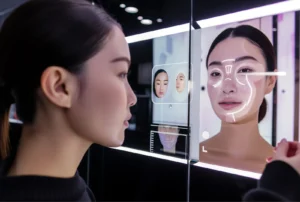
- Smartphone skin images
- Wearable sensors
- Lifestyle data
- Environmental conditions
- Product usage history
- User preferences
Machine learning algorithms then generate personalized skincare recommendations that evolve over time.
Wearable Beauty Technology
Smart wearable devices are expanding beyond fitness tracking.
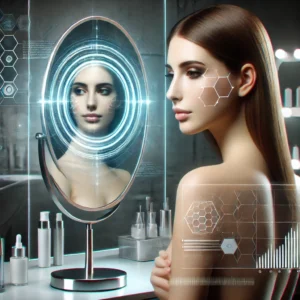
Emerging technologies include sensors capable of monitoring:
- Skin hydration
- Surface temperature
- UV exposure
- Environmental pollution
- Sweat composition
While consumer applications remain limited, these technologies could eventually support more adaptive skincare routines.
Stress and Skin Health
Psychological stress influences skin through multiple biological pathways.
Stress may affect:
- Skin barrier function
- Oil production
- Inflammatory responses
- Healing processes
Researchers continue studying biomarkers associated with these physiological changes.
Future digital health platforms may combine stress monitoring with personalized skincare guidance, although direct integration into cosmetic products remains largely experimental.
Climate-Adaptive Cosmetics
Climate differs dramatically between regions and seasons.
Adaptive beauty systems may account for:
- High humidity
- Cold temperatures
- Dry air
- Strong sunlight
- Urban pollution
- High altitude
Rather than requiring numerous specialized products, future formulations may perform effectively across a broader range of environmental conditions.
Biotechnology in Skincare
Biotechnology plays an increasingly important role in cosmetic innovation.
Scientists are developing bio-based ingredients using:
- Precision fermentation
- Plant cell cultures
- Marine biotechnology
- Engineered microorganisms
These methods can produce high-purity cosmetic ingredients while supporting more sustainable manufacturing practices.
Microbiome-Friendly Beauty
The skin hosts diverse microbial communities that contribute to overall skin health.
Researchers are designing products intended to support the natural skin microbiome through carefully selected ingredients.
This field continues to evolve as scientists gain a better understanding of host–microbe interactions.
Sustainability and Smart Formulations
Adaptive skincare may also contribute to environmental sustainability.
Potential advantages include:
- Reduced product waste
- More efficient ingredient use
- Longer product stability
- Lower packaging requirements
- Personalized dosing
These innovations align with broader sustainability initiatives across the cosmetics industry.
Challenges Facing Adaptive Cosmetics
Despite exciting progress, several scientific and technical challenges remain.
Researchers continue working to improve:
- Material stability
- Manufacturing scalability
- Long-term safety
- Sensor integration
- Cost-effectiveness
- Clinical validation
Many adaptive technologies remain in the research and development phase.
Ethical and Privacy Considerations
Personalized beauty increasingly depends on digital information.
Organizations collecting biological or behavioral data should prioritize:
- User consent
- Secure data storage
- Transparent AI decision-making
- Privacy protection
- Responsible personalization
Maintaining consumer trust will be essential as connected beauty technologies become more widespread.
The Future of Intelligent Beauty
Researchers envision beauty ecosystems that integrate cosmetics with digital health technologies.
Future platforms may combine:
- Artificial intelligence
- Wearable biosensors
- Smart mirrors
- Environmental monitoring
- Mobile health applications
- Personalized skincare databases
Rather than recommending identical routines every day, these systems could adjust skincare guidance continuously according to changing biological and environmental conditions.
Best Practices for Developing Adaptive Skincare
Organizations developing intelligent cosmetic products should:
- Base formulations on validated dermatological research.
- Use safe, well-characterized responsive materials.
- Conduct comprehensive clinical testing.
- Protect consumer privacy when using biological data.
- Ensure transparency regarding AI-generated recommendations.
- Design sustainable manufacturing processes.
- Continuously evaluate product performance under real-world conditions.
- Clearly distinguish commercially available technologies from experimental concepts.
Responsible innovation requires close collaboration between dermatologists, materials scientists, biotechnologists, and AI specialists.
Conclusion
Adaptive skincare represents one of the most promising frontiers in cosmetic science, bringing together biotechnology, smart materials, artificial intelligence, dermatology, and personalized health technologies. By recognizing that skin is a dynamic organ influenced by circadian rhythms, environmental conditions, stress, and individual biology, researchers are developing products designed to respond more intelligently to changing needs. Innovations such as controlled-release delivery systems, humidity-responsive materials, microbiome-friendly formulations, AI-powered skin analysis, and wearable sensor integration have the potential to transform skincare from a static routine into a continuously optimized, data-driven experience.
Although many of the most advanced concepts remain under scientific development, the direction of innovation is clear. Future beauty products are expected to become increasingly personalized, adaptive, and environmentally conscious, helping consumers care for their skin with greater precision while supporting sustainability and long-term skin health. As cosmetic science continues to merge with digital health and biotechnology, adaptive skincare may redefine how people approach beauty and wellness in the decades ahead.